
Most homeowners start their custom kitchen cabinets project the wrong way. They spend weeks on Pinterest, build out a layout they love, then arrive at a cabinetry studio expecting to hand over the plan and get started. What usually happens instead is a full redesign, and in many cases, a budget that takes a hit before a single cabinet is built.
After more than a decade designing and building custom kitchen cabinets for homeowners across the Greater Toronto Area, we’ve seen the same patterns play out over and over. What follows is everything we wish clients knew before they came through the door, so their project runs smoothly, their budget stays intact, and the kitchen they end up with actually works as well as it looks.
It isn’t choosing the wrong finish or overspending on hardware. The single biggest mistake is designing for looks first and ignoring function, and it costs homeowners in ways that are hard to undo.
A layout that looks beautiful on paper can be genuinely frustrating to cook in every day. The fridge, sink, and cooktop are positioned wrong. There’s nowhere logical to put pots or small appliances. Drawers can’t open properly because the island is four inches too wide. These aren’t hypothetical problems, they’re the issues we most often inherit from homeowners who planned independently and then came to us after something didn’t work.
The clients who get the best results are the ones who arrive with a rough idea rather than a finished plan, and let function drive the design. Once the workflow is solid, the work triangle, the storage logic, the clearances, the design layer falls into place quickly and confidently.
The clients who get the best results are the ones who arrive with a rough idea rather than a finished plan, and let function drive the design.
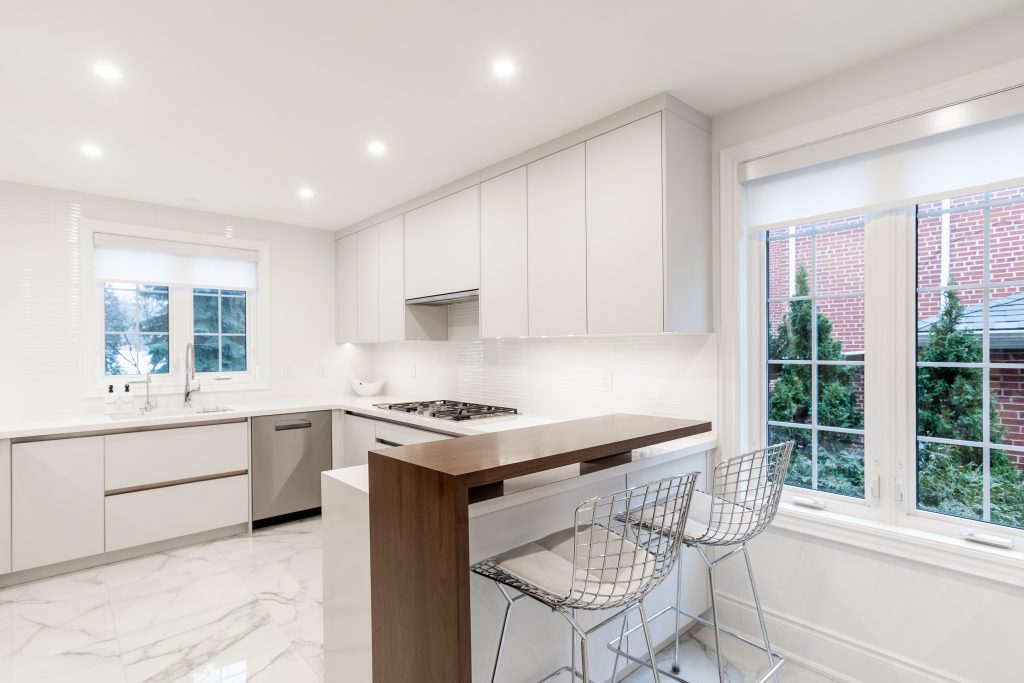
A common misconception is that custom kitchen cabinets mean flexibility at every stage. It doesn’t. Custom means precise, and that precision starts at the design phase, not the installation phase.
Manufacturers build cabinets as a system of individual components: panels, boxes, edge banding, and hardware. Every small decision like flooring height, appliance specs, wall conditions, filler sizes, affects final fit across the entire run.
Once production begins, what feels like a small change (“can we shift this cabinet two inches?”) isn’t a design tweak. A structural change can affect multiple cabinet runs, finished edges, and hardware alignment.The smoothest projects always happen when the team locks in every detail early. Treat the design phase as the real foundation of the build, not just the creative part.
One client came in with a clear vision: a sleek, modern kitchen with a large waterfall island, no upper cabinets, and a full tall cabinet wall. Strong concept. The problem only appeared once we laid it out properly.
The fridge was too far from the prep zone. The island was carrying both a sink and seating, which made it overcrowded and awkward to use. With no upper cabinets, storage was genuinely insufficient for how the family cooked.
The solution didn’t require abandoning the original look, it required refining it. We slightly reduced the island footprint, repositioned the fridge closer to the sink, reintroduced selective upper cabinets in a way that didn’t break the aesthetic, and reworked the internal storage throughout. The final kitchen looked almost identical to what the client originally imagined. It just worked.
This is why the design phase matters. A good cabinetry studio isn’t there to execute your plan, they’re there to make sure your plan actually works before anything gets built.
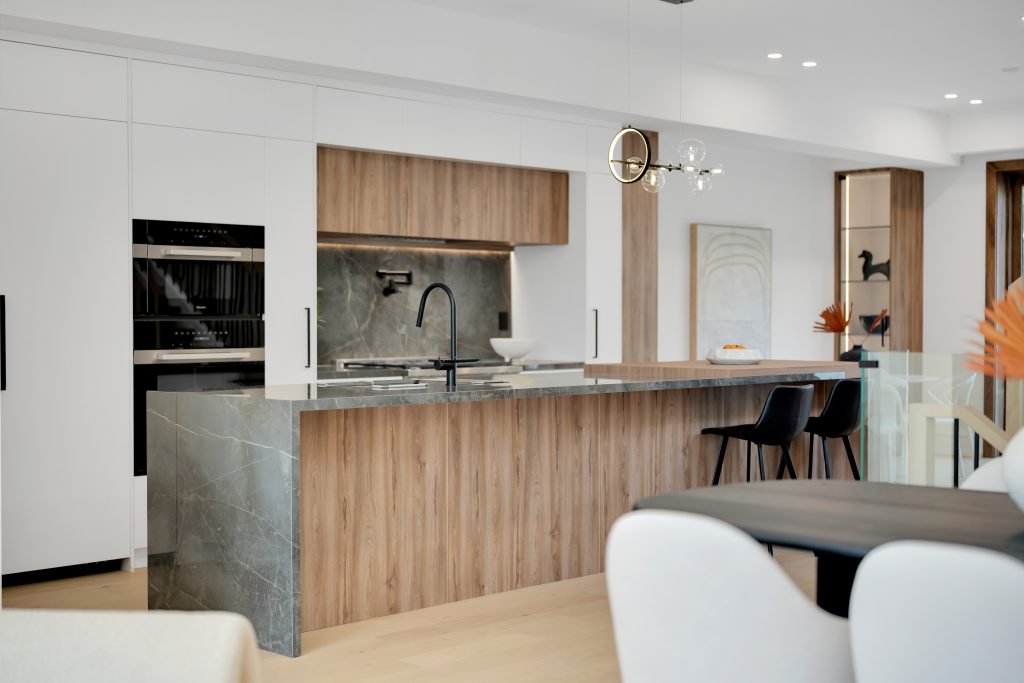
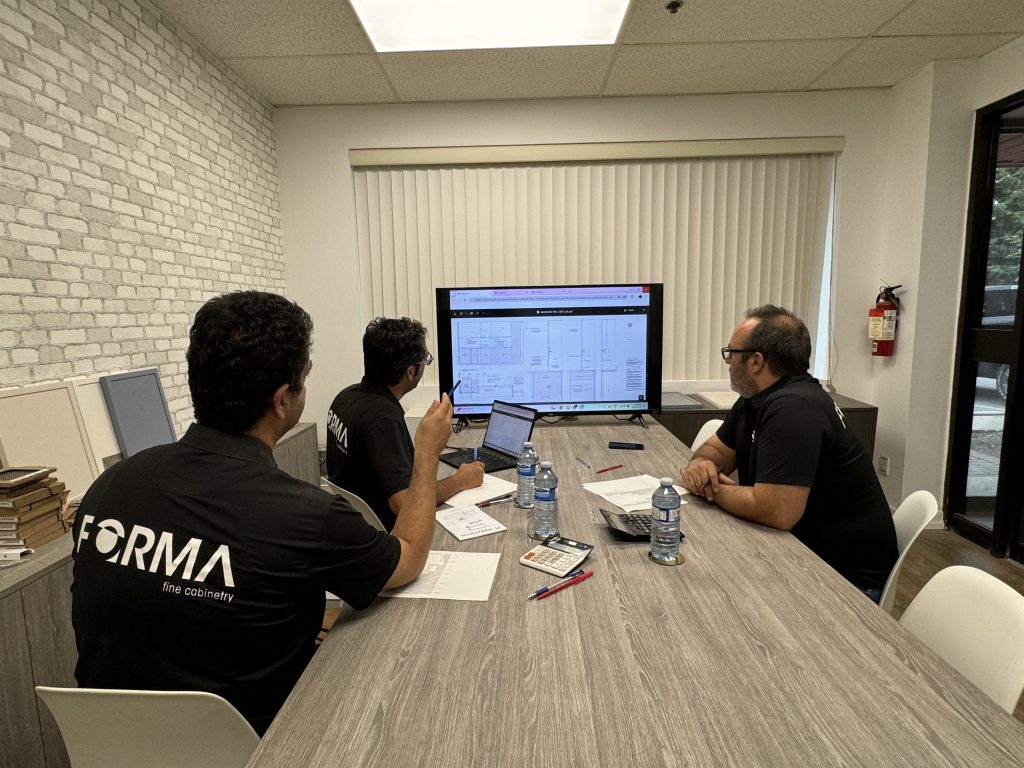
At Forma, everything is designed, fabricated, finished, and installed under one roof at our Vaughan facility. For clients, the practical impact is accountability without gaps.
When design, production, and installation are handled by separate companies, communication gaps are where most problems happen. A spec gets misread between designer and shop. An installer discovers the cabinets don’t account for a condition in the room and there’s no one to call who can fix it quickly. With in-house fabrication, the team that built your custom kitchen cabinets is the team that installs them. Last-minute adjustments are resolved directly. Quality control runs against a single standard throughout.
It also produces more accurate timelines, which in a renovation context, where multiple trades are coordinating, matters considerably.
One of the first structural decisions in any custom kitchen cabinets project is construction style, and it’s worth understanding before you fall in love with a particular look.
Face frame cabinets have a solid wood frame around the front of the cabinet box. They’re traditional in appearance, extremely durable, and very stable. The trade-off is a slightly reduced interior opening, which limits access compared to frameless designs.
Frameless cabinets (also called European-style or full-access) have the door covering the entire cabinet opening. They offer maximum interior space and a cleaner, more contemporary look, but require precise installation to ensure proper door and drawer alignment.
Neither is universally better. The right choice depends on your aesthetic, how you use the space, and the overall design direction. We walk every client through this decision early in the process because it shapes everything downstream.
Not all custom kitchen cabinets are built the same way, and the differences in material and construction quality are where long-term performance is won or lost.
Cabinet box material: Plywood is the preferred choice for cabinet boxes. It holds fasteners better, resists warping and moisture, and outperforms particleboard over time, especially in a kitchen environment where humidity fluctuates.
Door and drawer construction: Look for solid wood or high-quality MDF door fronts with a finish that won’t peel or crack. Drawer boxes should be built to handle daily use without loosening at the joints.
Hardware: Soft-close hinges and full-extension drawer slides should be standard, not an upgrade. These aren’t luxury features, they’re the baseline for cabinets that hold up over years of daily use.
Edge banding: On exposed panel edges, seamless edge banding prevents moisture penetration and separation over time. At Forma we use laser edge technology on applicable surfaces, which produces a bond that resists the yellowing and lifting you often see on lower-grade cabinetry.
Before committing to any cabinetry studio, there are four questions worth asking directly: The part the client controls most is the design stage. Finalizing layouts, finishes, hardware, and appliance details early keeps things moving. The most common causes of delay are late selections, revisions after production approval, and sites that aren’t ready when installation is scheduled. None of those are unusual, but being aware of them upfront helps.
There are hundreds of finish and material combinations available for custom kitchen cabinets. The way we simplify the process at Forma is to start with how the space is actually going to be used, then narrow everything into two or three strong design directions rather than working through an unlimited sample library.
What we’re seeing consistently across the GTA right now is a clear move away from sterile, all-white kitchens. Natural wood tones, white oak and walnut especially, are dominant. Matte and low-sheen surfaces are replacing high gloss. Clients are mixing materials more: wood paired with painted finishes, textured elements alongside cleaner surfaces. Hardware has become more expressive, with mixed metals and warmer tones replacing uniform finishes.
The underlying direction is toward spaces that feel warm, layered, and lived-in rather than showroom-perfect. That also tends to age better, which matters when you’re making a long-term investment.
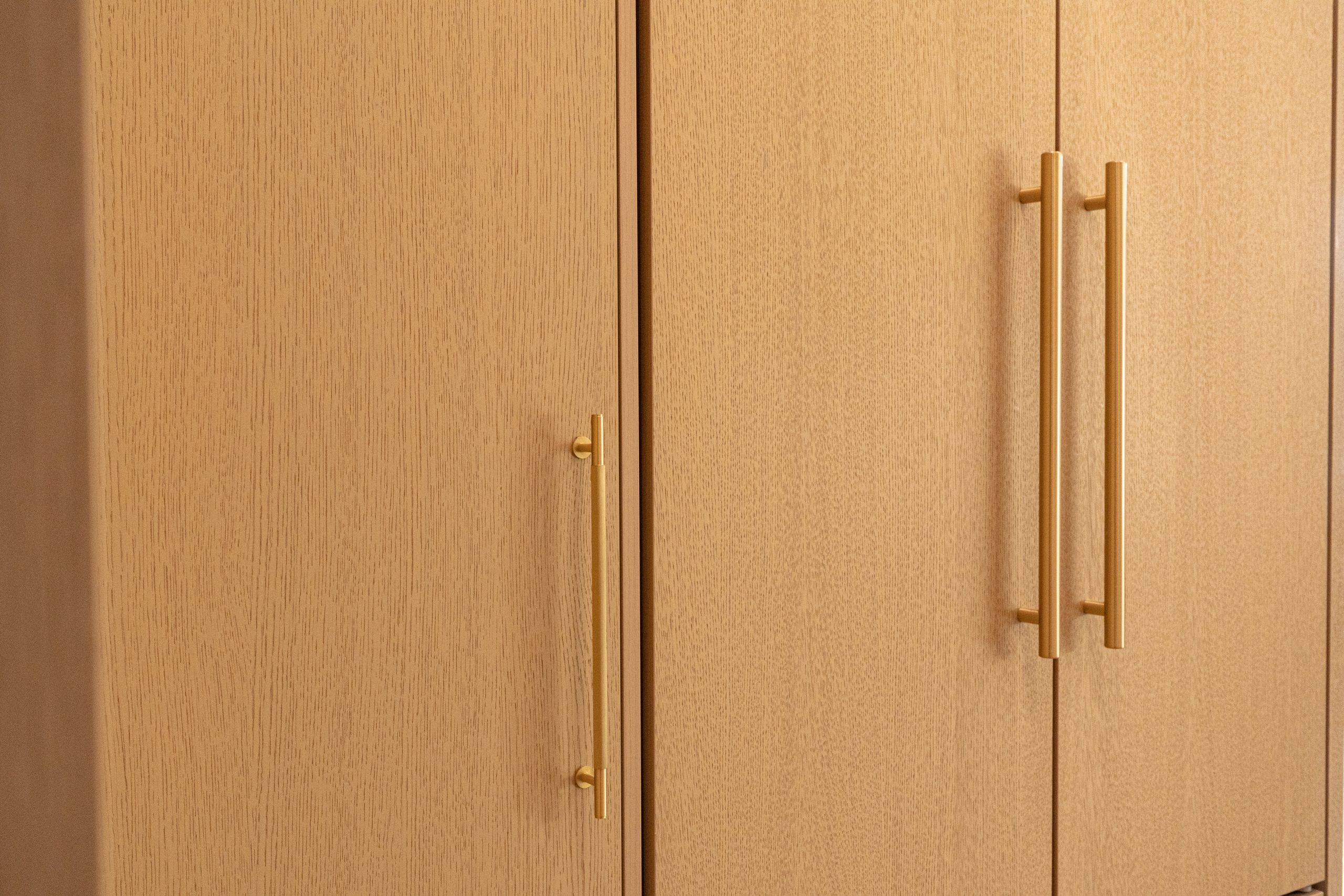
Budget constraints don’t have to mean visual compromise, they require better decisions about where money actually creates impact.
On one recent Toronto project, the budget was genuinely tight. The approach wasn’t to cut quality across the board, it was to be deliberate about where quality shows. We simplified the layout to avoid unnecessary structural changes, used a cost-effective material for internal cabinet boxes while keeping all visible surfaces premium, and chose clean continuous lines with minimal transitions rather than layering in decorative features.
The result looked like a significantly more expensive kitchen. Perceived quality in custom kitchen cabinets comes mostly from consistency and intention, not from how much was spent. Fewer visual breaks, stronger lines, and deliberate material choices outperform a more expensive but less considered design every time.
The result looked like a significantly more expensive kitchen. Perceived quality comes mostly from consistency and intention, not from how much was spent.
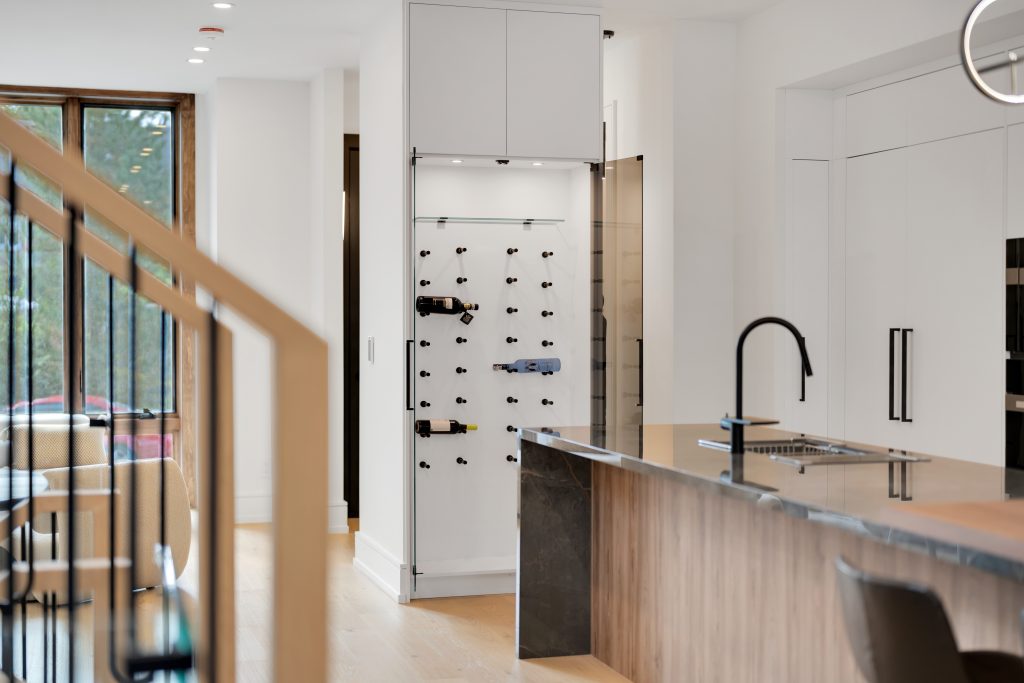
A kitchen that photographs well is built around symmetry, clean sight-lines, and visual impact. A kitchen that lives well is built around how the space gets used every day. Those two goals don’t have to conflict, but function has to come first.
The difference shows up in the details. A photo kitchen might have an uninterrupted island and hidden appliances. A livable kitchen prioritizes landing zones beside appliances, logical movement between the fridge, sink, and cooktop, storage positioned where items are actually used, and prep space that isn’t constantly interrupted by seating or decorative constraints.
We design from the inside out. Map how the space is used. Lock the function. Then refine the design to look as good as it works. Done well, there’s no trade-off between beautiful and useful.
From first consultation to installation, a typical project at Forma takes 8–12 weeks depending on scope and complexity. That window covers design development and approvals, production at our Vaughan facility, finishing and quality control, and delivery and installation.
The part the client controls most is the design stage. Finalizing layouts, finishes, hardware, and appliance details early keeps things moving. The most common causes of delay are late selections, revisions after production approval, and sites that aren’t ready when installation is scheduled. None of those are unusual, but being aware of them upfront helps.
Installation day is not the end of the process. Once the kitchen is in, we complete a full site check, confirming alignment, hardware function, and that everything matches the approved design. If anything needs adjustment, whether that’s a door alignment, a drawer, or a finishing detail, it’s handled directly by the same team that built it.
We walk every client through the space before we leave. Our warranty covers manufacturing defects, hardware performance, and installation-related adjustments under normal use. If it’s related to how it was built or installed by us, it’s taken care of.
The goal isn’t just a finished kitchen. It’s a kitchen that performs the way it was designed to, long after the tools are packed away.
The best time to bring us in is before you have a finished plan, not after. The earlier the function is established, the better the design, the timeline, and the result.
Start a Conversation See Our Process